“[D]igital testimonio. . . gives urgent and powerful voice to individual and collective Latinx experiences and allows for broader, more democratic authorship, dissemination, and reception” (508).
Although Latinx people are not a monolith but possess a large spectrum of diverse experiences, digital testimonio creates a digital writing environment for the voices of individuals who feel isolated to connect with audiences who share difficult memories that have heretofore gone unspoken.
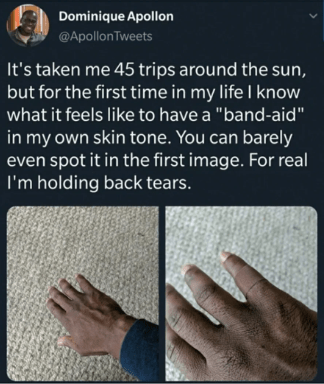
“Many African-American users filled Twitter with tears of joy emoji and newly available black praise-hand emoji. Yet, despite the removal of considerable an improper constraint at the level of code, other constraints of culture remained. As New York Times columnist Tutt (2015) rightly complained, these new customization options posed new problems for non-white users: “Because I’m black, should I now feel compelled to use the ‘appropriate’ brown-skinned nail-painting emoji? Why would I use the white one? Now in simple text messages and tweets, I have to identify myself racially” (Tutt, 2015). Tutt, like many non-white users, now had to scrutinize white friends’ rhetorical decisions (practice) to send her a “black angel” at Christmas instead of neutral or white-skin tone angels. Furthermore, a cursory examination reveals that the 8.3 update offered physical diversity, but not cultural diversity. The lack of the latter can be seen in an ongoing Western-centric bias for popular food, clothing, religion, and transportation emoji.
“Black scholars have long held the understanding that at times we laugh through the pain as a protective function when discussing deeply traumatic topics such as the continued violence from White supremacist systems.”
Williams calls the memes “a cultural critique of White surveillance and White racial dominance” and suggests that there might be a “shifting public consciousness about White supremacy.” It’s hard to imagine that this shift took place only five years ago.
“Reality is subjective, and the study of what is knowledge is an interrogation of the agreed-upon reality.” (Tekobbe 6) This reminds me of one of the features of Critical Race Theory, which is counter-storytelling or counter narratives. The stories of those whose voices aren’t often heard work to confront the dominant narrative.
“Can reconciliation exist when those who have done wrong never ask for forgiveness or acknowledge their wrongs?” (Sanchez 95) I realized early in the documentary that I had seen the film before, years ago. I’m not sure in what circumstances I came across it; either a film festival or in my research for a new curriculum. But it struck me how much the images stayed with me. Particularly the palpable fear of the black residents who lived outside Grande Saline. The fact that they still lived in fear of the town indicates a threat that still exists. It doesn’t seem that it’s possible for those residents to reach reconciliation for the harms done against black people when black peoples’ lives are still in danger.
Professor Sanchez’s chapter on his experiences growing up in Grande Saline, Texas reminded me of the documentary “Closer to the Truth”, about the massacre of five residents by the local KKK that took place during a civil rights march in Greensboro, North Caroline in 1979. This documentary did have some of the men who took part in that shooting actually engage in dialogue with the victims (or families of the victims). I don’t recall the outcome (I’m eager to re-watch it now) but I remember feeling both hopeful that there was a Truth and Reconciliation Commission established by grassroots activists and the local government. I feel like true reconciliation can only happen when there is a willingness by people in positions of power to concede to the needs and requests of survivors for some resolution.
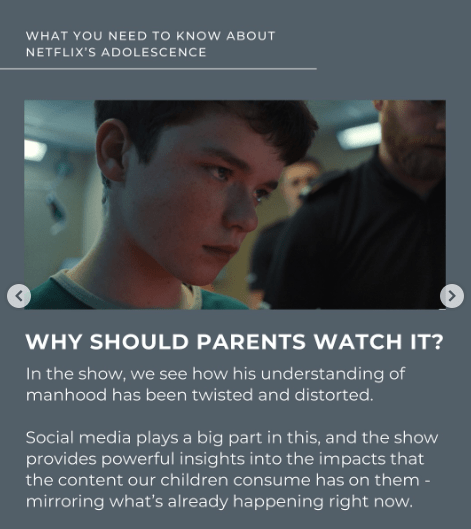
“We usually don’t tell the other person to stop talking; we just pull out our phone and spend some time pecking at it, leaving the other person to conclude, reasonably, that she is less important than the latest notification. When a conversation partner pulls out a phone,” or when a phone is merely visible (not even your own phone), the quality and intimacy of a social interaction is reduced.” (Haidt 122)
“62% of children reported that their parents were “often distracted” when the child tried to talk with them,” When they were asked the reasons why their parents were distracted, cell phones were the top response. Parents know that they are shortchanging their own children.” (Haidt 122)
“When screens are allowed in bedrooms, however, many children will use them late into the night—especially if they have a small screen that can be used under the blanket. The screen-related decline of sleep is likely a contributor to the tidal wave of adolescent mental illness that swept across many countries in the early 2010s.” (Haidt 125)
“To be clear, the great majority of adolescents using Instagram or playing Fortnite are not addicted, but their desires are being hacked and their actions manipulated nonetheless… touch screens and internet connections opened up vast new possibilities for employing behaviorist techniques.” (Haidt 130)
“Social media can provide benefits for some youth by providing positive community and connection with others who share identities, abilities, and interests. It can provide access to important information and create a space for self-expression.” (Haidt 136)
Haidt doesn’t seem to offer any solutions to the problems that he presents (perhaps in later chapters of the book). Social media and smartphones aren’t going anywhere any time soon. In the meantime, how to do we best support our students who are struggling through this technological growth spurt?
“I privilege and prioritize the stories of people of color and from underrepresented communities. And the thing that I’m trying to show my students all of the time is that these people are theoretical and intellectual. Their stories are viable and valuable in the institution… to be an academic or write in academia doesn’t mean you have to write in one standard type of writing practice or in a certain kind of voice.” – Andrea Riley-Mukavetz (p. 7)
“I do define my work as cultural rhetoric pedagogy. I have thought about describing it as decolonial pedagogy because practice, experience, and relationships are so central…it requires us to redefine our relationships to knowledge and meaning. This redefining is ultimately decolonial.” – Andrea Riley-Mukavetz (p. 3)
Cedillo’s language in “Diversity, Technology, and Composition” seems too esoteric to be considered decolonial. In what ways must we conform to the language of mainstream academia in order to spread the message that the language of mainstream academic must be broadened to include more diverse voices? Would our voices be heard otherwise? What is the cost of that conformity?
My students are part of a Demystifying Language Project at Fordham University. They are working with an anthropology and linguistics professor, revising academic papers to make the language more accessible to young people. It seems that if rhetoricians are committed to decolonizing language and storytelling, it might help to start with the language in their own academic papers.
“Approaching writing pedagogy with a focus on fostering reflective practice and treating composing as culturing is not necessarily an easy path.” (Arola 282)
What does this pedagogy actually look like?
Many students come to the classroom with their own fears and insecurities and struggles with literacy. They feel desperate to “get things right” and so they turn to AI, which is empty of their own rich authentic voices and ideas.
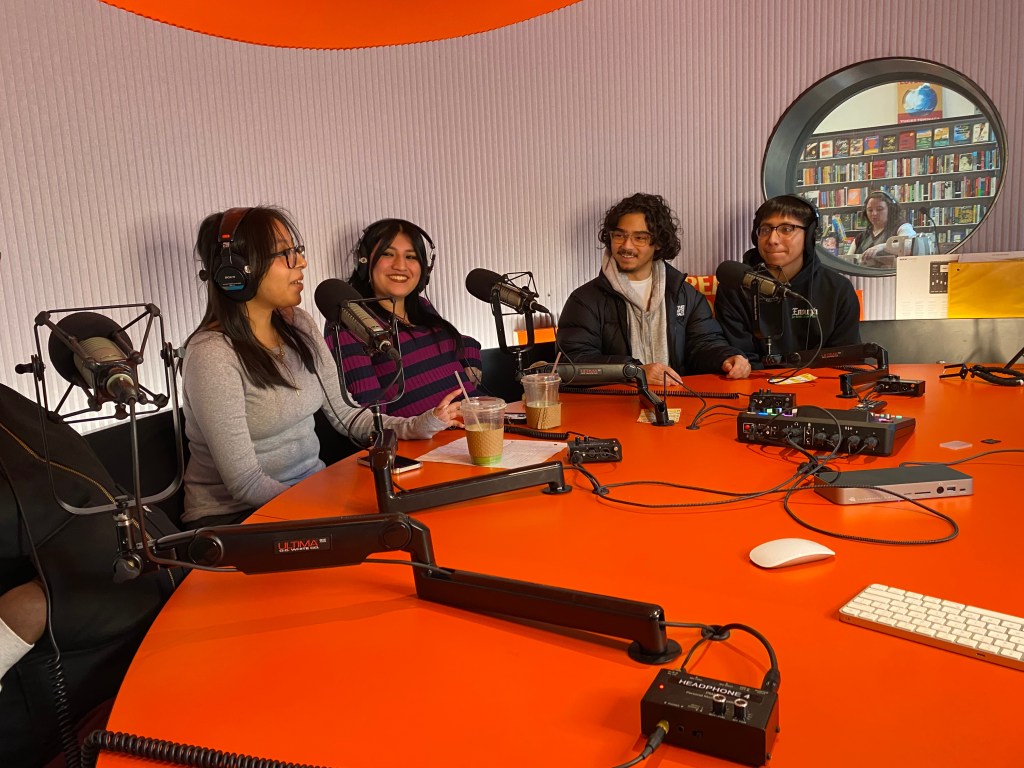
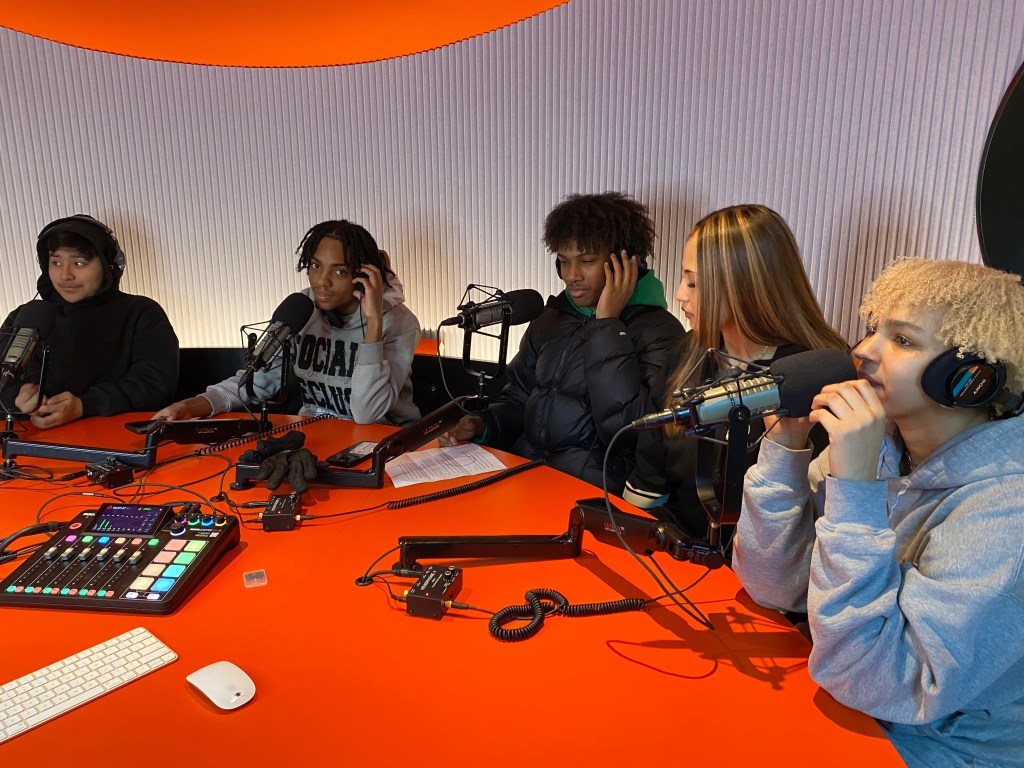
In Lesson 3 of McCorkle and Palmeri’s article, they discussed the ways in which teachers designed lessons where students were producing their own media. “We classified an activity as media production if students were making something like a the radio or TV broadcast even if they were not using professional tools,” they stated. However, as a teacher I’ve found that many opportunities have opened up to provide students with professional tools to produce media like podcasts. A local bookstore called P&T Knitwear (named after the previous textile business that occupied the building) offers community members free access to their professional podcast studio. Anyone can sign up to create their own personal or professional series. This past year, my students used the studio to have a conversation about the expectations around body image and how that effects young people psychologically. This assignment was for a course of Feminist Controversies which I co-taught with a social studies teacher.
In Lesson Five of McCorkle and Palmeri’s paper, they discuss the changing access that people have to new media, specifically the way that computers will “increasingly become integrated into many kinds of mobile devices.” In 2017, my students were asked to perform an introduction to our advisory group, where everyone’s unique personality could be spot-lighted. One student chose to use his phone and the new editing function on the device to film our group acting out a sitcom-like introduction. The short film was a huge hit and provided other advisory groups with ideas on how to get creative with their projects.









 Bee Tee Dubs